Gravel drives lose stone over time. It gets carried out on tyres and shoes, pushed into borders, pressed into the base and occasionally cleared by snow shovels. When the layer drops below about 30mm, the base starts to show, the surface ruts more easily and weeds find a home. A top-up of matching stone, usually around 20mm to 30mm, is often all that is needed.
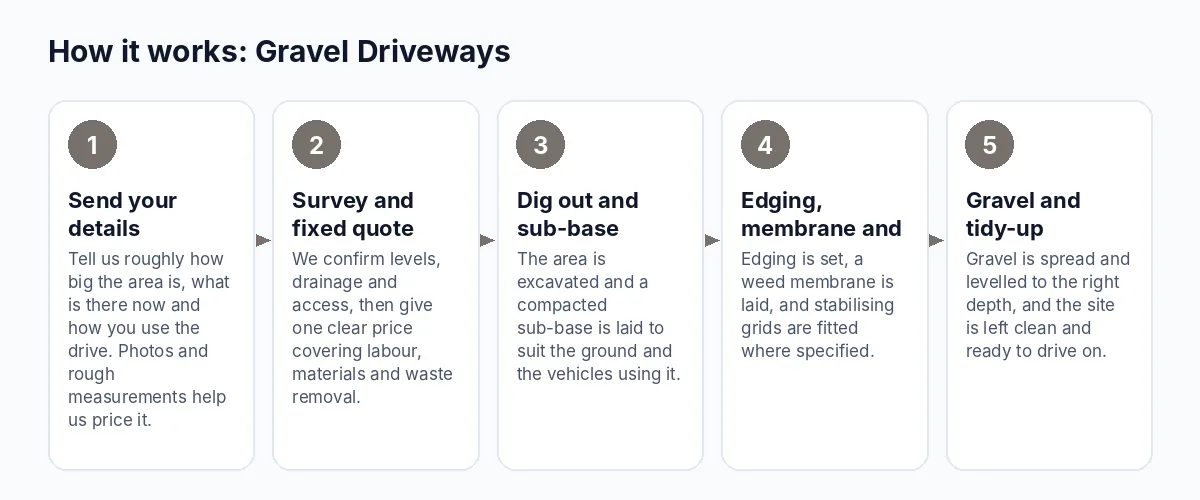
If the drive is rutted, has bald or sunken patches, or has turned into a mix of mud and stone, a top-up will only hide the problem for a while. The proper fix is to scrape back the gravel, repair or replace the membrane, rebuild and recompact the sub-base where it has failed, add grids if stone migration is the issue, and then relay clean gravel to the right depth.
What is included
- Inspection of gravel depth, membrane condition and base
- Weed and moss removal before any new stone goes down
- Raking out ruts and redistributing existing gravel
- Top-up of matching or new gravel to the correct depth
- Lifting and screening or replacing contaminated gravel
- Repair or replacement of damaged membrane
- Rebuilding sunken areas of sub-base and refitting edging
- Optional addition of stabilising grids in problem areas
Who it is for
- Drives where the base or membrane is starting to show through
- Rutted drives with puddles in the wheel tracks
- Weedy drives where the membrane has failed or was never fitted
- Owners wanting a fresh look or a different colour of stone
- Properties being prepared for sale or a new tenancy
How much does it cost?
As a guide, re-gravelling a drive in the UK usually costs around £15 to £35 per square metre. Where the membrane and base need repairs, or the drive needs a full lift and re-lay, prices are typically closer to £30 to £70 per square metre. See our full cost guide.